SEO for startups is different from SEO for established businesses because you usually start from zero: a new domain, no history, few links and a product that may still be changing. That's not a reason to wait. The decisions you make in the first months, such as site structure, technical setup and which problems you write about, decide how quickly search can become a reliable channel. This page explains how we approach SEO for early-stage companies, and what's realistic.
Building a tech product? Our SEO for technology companies guide covers SaaS feature pages, docs and JavaScript sites.
We're a new agency ourselves, and we're building this site's search visibility from zero in public, so we know the starting point well.
What makes startup SEO different
- No history: Google knows little about a new site, so early progress comes from clear, useful pages on specific topics rather than broad, competitive terms.
- Changing product: positioning shifts, so the site structure has to be flexible without breaking URLs every quarter.
- Small team: SEO has to fit alongside everything else, so priorities matter more than volume.
Our six steps of SEO for startups
1. A clean technical launch
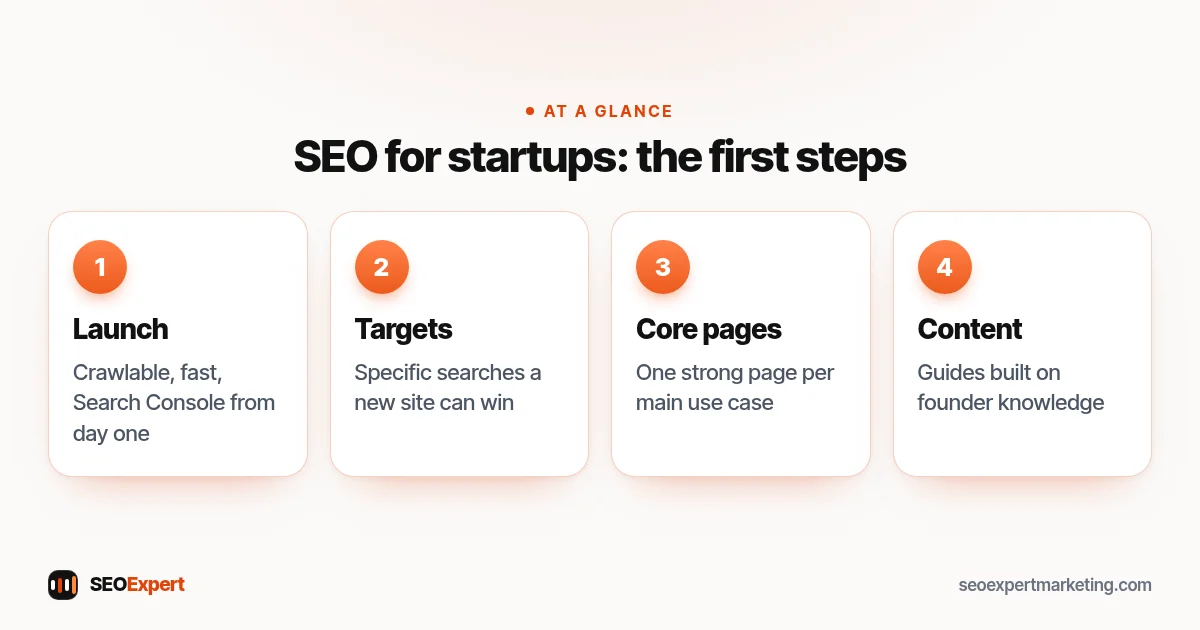
Make sure the live site can be crawled and indexed, staging sites stay blocked, there's one canonical version of each page, and the site is fast on mobile. Google's SEO Starter Guide covers the basics; our technical SEO services handle the checks. Set up Search Console from day one so you can see what Google sees.
2. Find the searches you can actually win
New sites rarely rank for broad category terms early on. We look for specific problem searches, comparisons and use cases where your product genuinely helps and competition is thinner. Our keyword research services build this list.
3. One strong page per core use case
Instead of one homepage trying to rank for everything, build focused pages for each main problem or customer type you serve, explaining the problem, how your product helps and what it costs or how to try it.
4. Content founders are uniquely qualified to write
Founders know their customers' problems deeply. Short, specific guides drawn from that knowledge, with real examples, beat generic articles. Google's guide to creating helpful, reliable content asks whether content offers original information and first-hand experience; that's where startups can stand out.
5. Earn early links honestly
Launch coverage, founder interviews, integrations partners, directories in your niche and genuinely useful tools or data earn links that matter. Avoid bought links and link networks; Google's spam policies treat them as link spam, and a new site can't afford a penalty.
6. Measure leads and sign-ups, not just traffic
We track which pages bring trials, demo requests or sign-ups, so SEO decisions follow revenue, not vanity metrics.
In short, SEO for startups with us moves through these stages:

Startup SEO and other channels
SEO is slow at first, so most startups combine it with faster channels such as direct outreach, communities, partnerships or paid campaigns. The two help each other: paid and outreach results show which messages and problems resonate, and those insights shape the pages you build for search. Over time, SEO for startups becomes the channel that keeps working without a budget for every click.
Plan for redesigns and pivots
Startups redesign often. Before changing your site structure or domain, list your current URLs, map each to its new home and set up redirects, so you don't lose the visibility you've built. We help with this mapping whenever a change is planned.
Common startup SEO mistakes
- Launching with the site accidentally blocked from search.
- Changing URLs with every redesign without redirects.
- Publishing large numbers of thin, auto-generated pages.
- Targeting only huge, generic keywords from day one.
- Leaving SEO until after launch, then rebuilding the site.
SEO for startups: pricing with us
Startups use the same three monthly plans as every client: SEO Starter at $395, SEO Growth at $795 and SEO Authority at $1,495 (USD). A very early company often starts with SEO Starter for the technical foundation and first core pages; once the product and messaging settle, SEO Growth adds keyword mapping, internal linking and competitor analysis. Your written proposal confirms the scope and price; you can compare the packages line by line.
Who our SEO for startups suits
It suits early-stage companies with a clear customer and problem, founders willing to share knowledge for content, and teams that want steady growth rather than overnight traffic. It doesn't suit startups looking for shortcuts, mass-generated pages or promises of rankings by launch day.
A realistic timeline
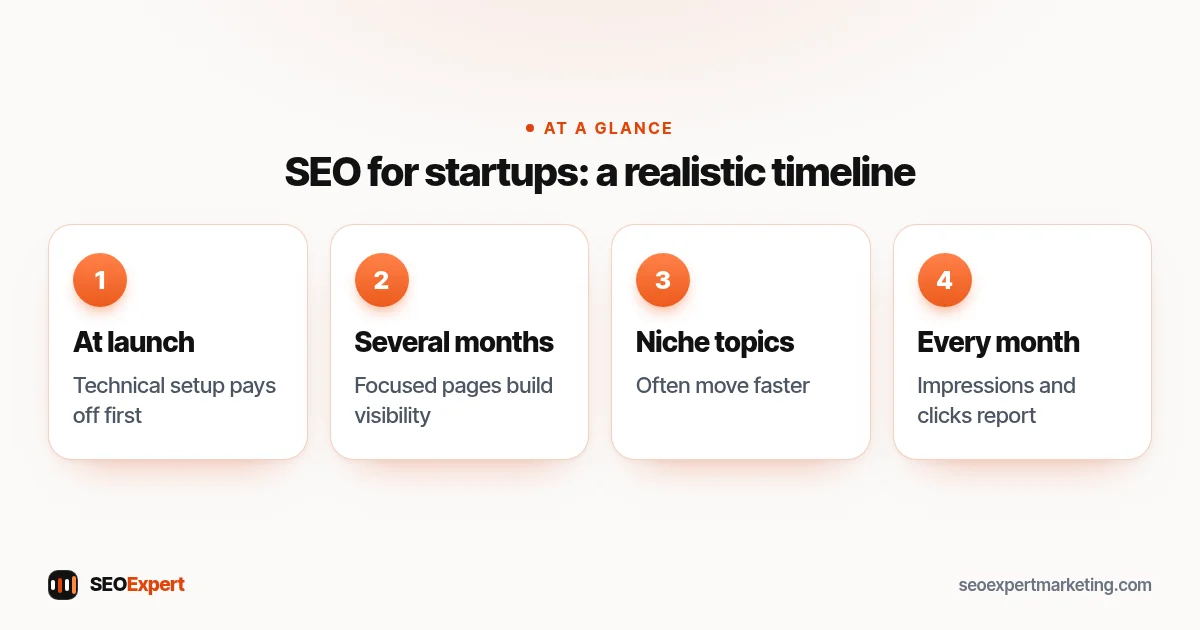
New sites usually take longer to gain traction than established ones. Technical setup pays off immediately in crawlability; focused pages and content tend to build visibility over several months, faster for niche topics. Each month we show which pages gain impressions and clicks in Search Console, so you can see early progress before sign-ups follow.
A typical timeline of SEO for startups with us: