Backlinks are links from other websites to yours. Google uses links to discover pages and as one of many signals about how well known and trusted a site is. For a small business, a handful of relevant, genuine backlinks from local and industry websites is worth far more than hundreds from random sites. This guide explains ten honest ways to earn backlinks, how to judge them and the shortcuts to avoid.
Why backlinks matter
When a respected local newspaper, trade association or supplier links to your website, it's a sign that real people know and recommend you. Google's systems use links like these, along with many other signals, to understand which pages are useful and prominent. Links also bring visitors directly: someone reading about a local charity event may click through to the business that sponsored it.
New to links? Start with our guide to what a backlink is, including nofollow and sponsored links.
What makes a good backlink?
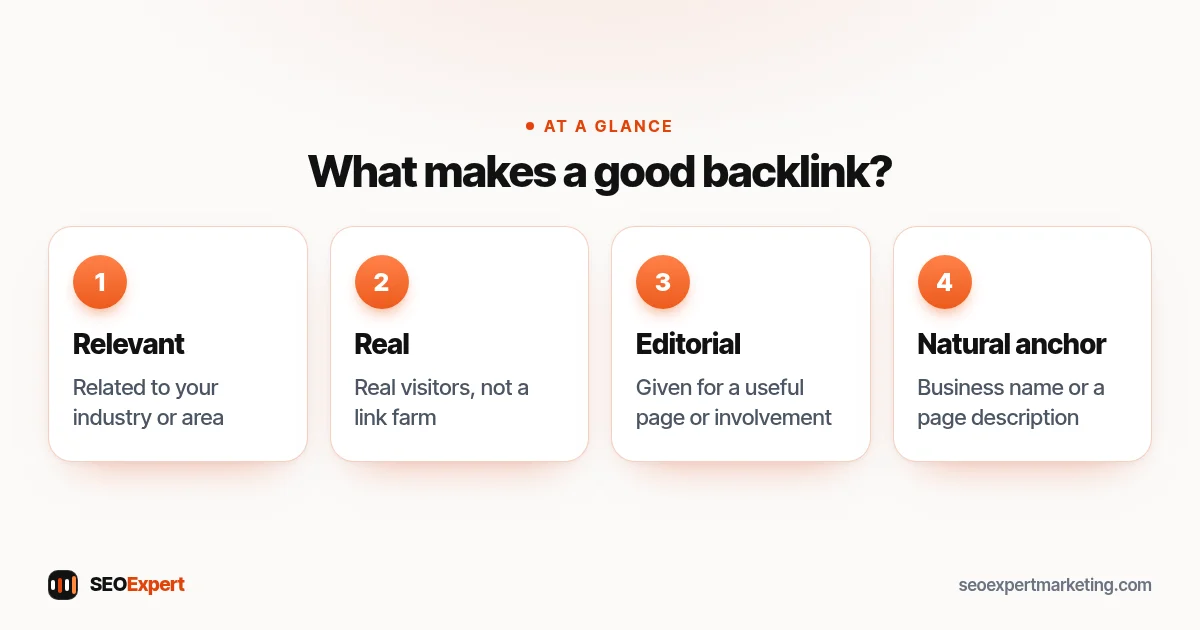
- Relevant: from a site related to your industry or area.
- Real: from a site with real visitors and its own purpose, not a link farm.
- Editorial: given because your page is useful or your business is genuinely involved.
- Natural anchor text: usually your business name or a description of the page.
Four qualities of good backlinks, at a glance:
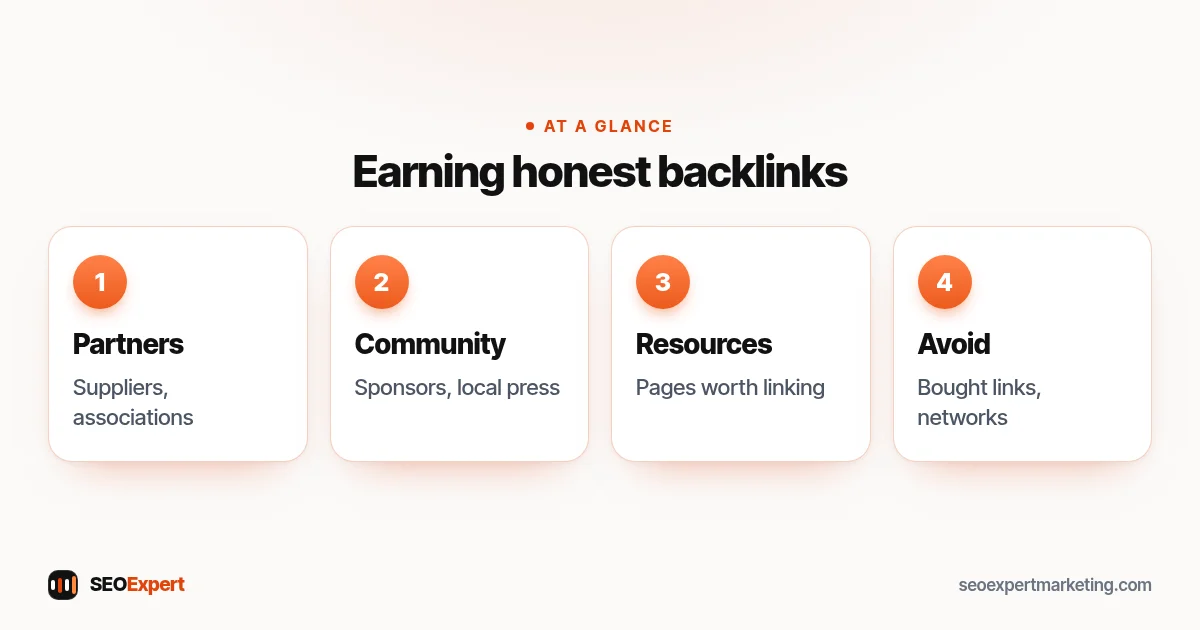
10 honest ways to earn backlinks
1. Suppliers, manufacturers and partners
Many suppliers and manufacturers list approved installers, stockists or partners on their websites. Ask your suppliers whether they have a stockist or installer directory, and make sure your listing links to your site.
2. Trade associations and professional bodies
If you're a genuine member of a trade body, chamber of commerce or professional association, your member listing often includes a link. Only claim memberships you really hold.
3. Local sponsorships and community work
Sponsoring a local sports team, charity event or school fair often earns a mention and a link on their website. Choose causes you actually care about; the link is a bonus, not the reason.
4. Local press and news
Local news sites cover new openings, expansions, community projects and expert comment on local issues. A short, newsworthy story sent to the right journalist can earn coverage with a link.
5. Useful resources on your own site
Pages that genuinely help people, such as a price guide, a seasonal checklist or a clear explanation of local rules, are the kind of thing other sites link to naturally. Our guide to an SEO content strategy explains how to choose these topics.
6. Business directories that matter
A few quality directories for your country and industry are worth having for consistency and visibility, even when their links carry little weight. Our guide to local SEO citations lists the main ones. Avoid low-quality directories that exist only to sell links.
7. Customers and clients who are businesses
If you serve other businesses, they may be happy to mention you as their web designer, accountant or builder, for example on a project page. Ask politely, and never offer payment for links.
8. Expert comment and guest articles
Industry blogs, trade magazines and local websites sometimes welcome expert comment or a genuinely useful article. Write for their readers, not for the link, and don't use keyword-stuffed anchor text.
9. Reclaim unlinked mentions
Search for your business name in quotes. If a site mentions you without linking, a polite note asking whether they'd add a link to help readers find you often works.
10. Fix broken links to your site
If other sites link to pages you've moved or deleted, set up redirects so those links still work. Our guide to 301 redirects explains how.
For a step-by-step method with resource pages and broken links, see our guide to resource page link building.
Links from your own activities
Look at what your business already does: talks at local schools, workshops, open days, charity fundraising, free advice clinics or partnerships with complementary trades. Each of these is a real reason for another website to mention you. Keep a list, and every time something happens, check whether the organizer's website, a local events page or a community newsletter could link to your page about it. These backlinks reflect genuine local involvement, which is exactly what makes them valuable.
What to avoid
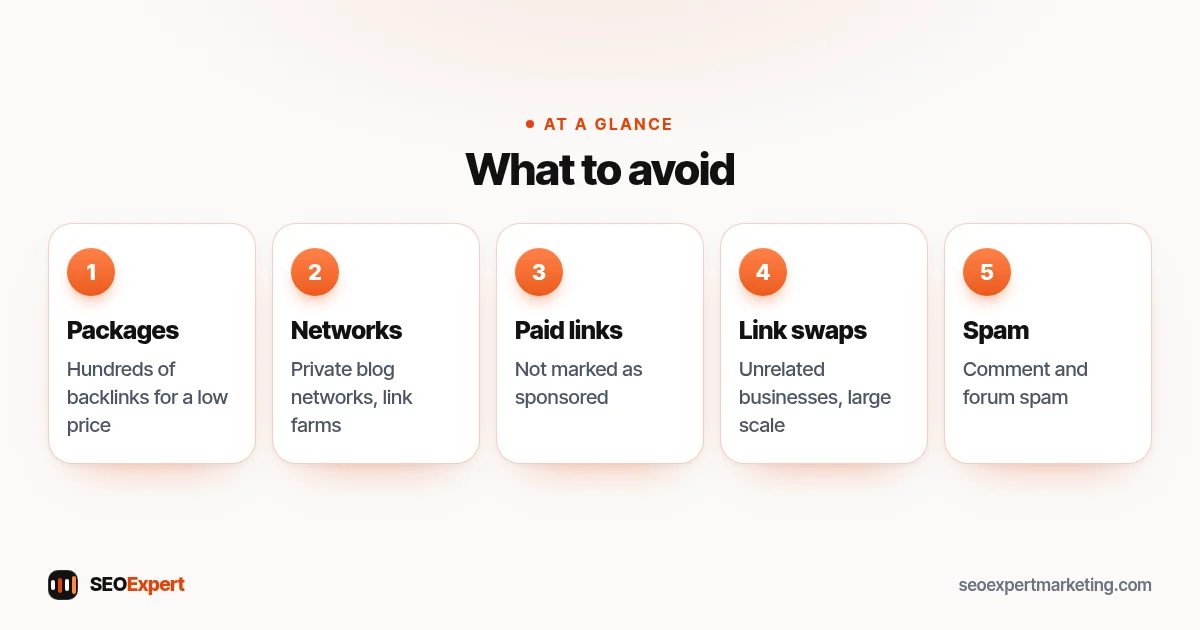
Google's spam policies describe link spam, including buying or selling links for ranking purposes, excessive link exchanges and using automated programs to create links. Avoid:
- Packages promising hundreds of backlinks for a low price.
- Private blog networks and link farms.
- Paying for links that aren't marked as sponsored.
- Swapping links with unrelated businesses on a large scale.
- Comment and forum spam.
Sponsored placements are fine for visibility when the links are properly qualified; Google's link best practices explain the rel attributes for sponsored links.
Five ways of getting backlinks to avoid:
A simple outreach email
Most link requests fail because they're long, generic or all about you. Keep it short and specific: who you are, the connection you share, and why a link would help their readers. For example: "Hi Maria, I'm the owner of Example Heating, and we've been installing your boilers in Leeds for six years. I noticed your installer directory lists us without a link to our site. Could you add one, so customers can see our reviews and availability? Thanks either way." This is an illustrative example; always adapt it to a real relationship.
Building links steadily
Earning links works best as a small monthly habit rather than a one-off campaign. Set aside an hour or two each month: one supplier or association to contact, one local story or event to follow up, and one useful page to improve. Over a year, that steady pace produces a natural, varied set of links that matches how a real, active local business is mentioned online, which is exactly what Google's systems look for.
Local links vs national links
For a local business, links from your own area usually matter more than links from big national sites: a local newspaper, community group, nearby business partner or regional association connects your business to the place you serve. National links help most when you sell across the country or online. Aim for links that real customers might actually see and click.
How many backlinks do you need?
There's no target number. A local business competing in one town might do well with a few dozen relevant backlinks built steadily over time; a national online store needs more. Look at the businesses ranking above you, as explained in our SEO competitor analysis guide, to see roughly what they have and where it comes from.
How to track your backlinks
Search Console's Links report shows the sites linking to you and your most-linked pages. Free versions of SEO tools show a sample too. Keep a simple list of links you've earned and the outreach you've done, so you don't repeat requests.
Need help?
Our link building services use white-hat outreach only, and our one-time Link Building Outreach costs $149 for 3 links or $249 for 5. Send your website on WhatsApp for a free review.
Backlinks: quick answers
Are backlinks still important for SEO?
Yes, as one of many signals. Relevant links from real websites help Google understand which sites are well known and trusted.
Should I buy backlinks?
No. Google's spam policies treat buying links for ranking purposes as link spam. Paid placements should be marked as sponsored.
What's the easiest backlink for a local business?
Often suppliers, trade associations and local organizations you already work with, which may list you with a link.
How long do backlinks take to help?
Usually weeks to months after Google finds them, and the effect builds as you earn more relevant links over time.
