SEO case studies are one of the best ways to see what search optimization can achieve, but many published online are hard to verify: unnamed clients, cropped graphs, no explanation of what was done. This article takes a different approach. Every case below comes from Google's Search Central case studies, published by Google with the companies named, and every number is from those pages. We explain what each company did in plain language and what a small business can take from it.
To be clear: these are not our clients' results. We're a new agency and will publish our own SEO case studies only with real clients' permission and real numbers. Until then, we report on this site's own progress in public.
1. Saramin: fixing the basics, then doubling traffic
Saramin, one of Korea's largest job platforms, registered in Search Console in 2015 and spent the first year checking crawl errors and fixing issues so Googlebot could crawl and index the site properly. According to Google's Saramin case study, that simple work alone brought a 15% increase in organic traffic. They then removed meta tags cluttered with unhelpful keywords, used canonical URLs, removed duplicate content and added structured data. In the September 2019 hiring season, organic traffic from Google Search rose 102% year over year, new member sign-ups from organic search rose 93% and the conversion rate rose 9%.
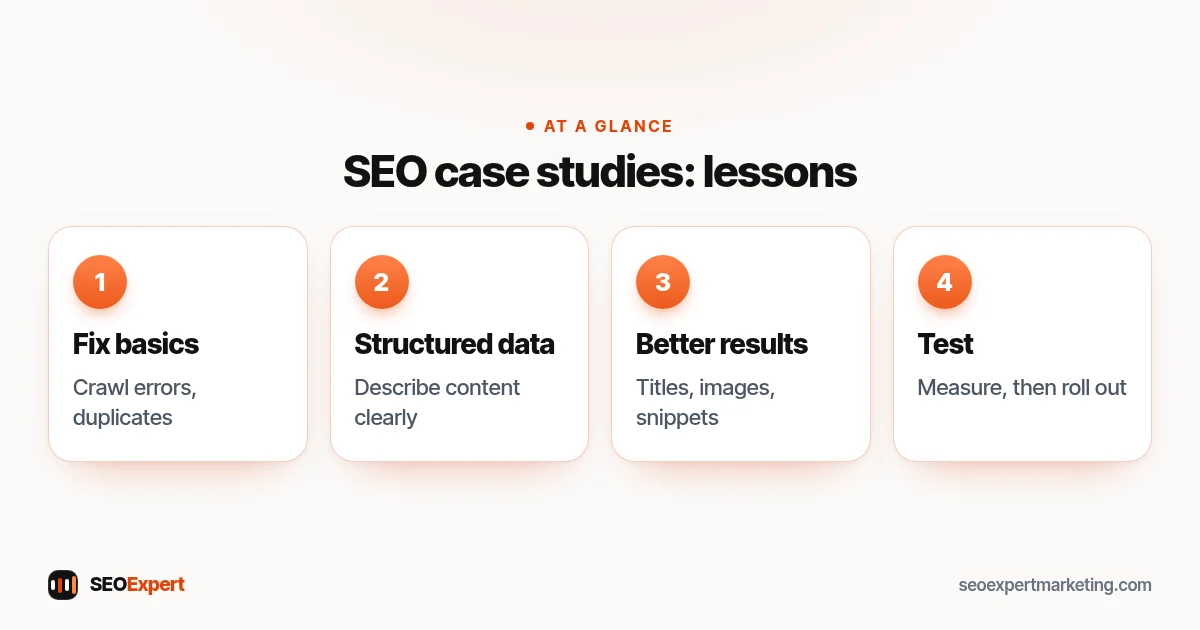
Lesson for small businesses: the unglamorous basics, crawl errors, duplicates and cleaner pages, came first and paid off. Fixing what Search Console shows you is the cheapest SEO there is.
2. Wix users: connecting Search Console
In the Wix case study, Google reports that Wix sites which connected their Search Console account through Wix saw an average traffic increase of 15% over one year (July 2022 to July 2023), compared with their traffic before connecting. Ecommerce sites using the new features saw a 24% higher increase in monthly gross product value.
Lesson: simply setting up and using Search Console, seeing indexing problems and search data, is associated with growth. It's free and takes minutes.
3. Rakuten Recipe: structured data
Rakuten Recipe, a Japanese recipe platform, used Recipe structured data and worked to make it more complete. Google's case study, listed in the collection linked above, reports that traffic to Rakuten Recipe pages from search engines rose 2.7 times and average session duration became 1.5 times longer.
Lesson: structured data that accurately describes your content can make your results more useful. For a small business, the equivalents are LocalBusiness, Product or FAQ markup where they genuinely apply.
4. Monster India: job posting markup
Monster India added JobPosting structured data, first as a pilot and then across all its jobs in India. Google's case study reports a 94% increase in organic traffic to job detail pages and a 10% increase in applications.
Lesson: test on a small scale, measure, then roll out. That approach works for any change, from new page templates to rewritten titles.
5. Eventbrite: event markup
Eventbrite implemented event structured data to appear in Google's event search experience. Google's case study reports a 100% increase in the typical year-over-year growth of traffic from Google Search to Eventbrite's event listing pages.
Lesson: if Google offers a search feature for your type of content, such as events, products or local business details, making your pages eligible for it can open up a new source of visits.
6. Kirbie's Cravings: larger images in results
In Google's large images case study, the food blog Kirbie's Cravings added a short line of HTML that allowed Google to show larger image previews, and saw its click-through rate increase by 79%.
Lesson: small changes in how your pages appear in results, such as better titles, descriptions or images, can change how many people click even if rankings stay the same.
What these SEO case studies have in common
| Company | What they did | Published result |
|---|---|---|
| Saramin | Fixed crawl errors, duplicates, added structured data | 102% more organic traffic in peak season |
| Wix sites | Connected Search Console | 15% average traffic increase |
| Rakuten Recipe | Recipe structured data | 2.7x search traffic |
| Monster India | JobPosting structured data | 94% more organic traffic to job pages |
| Eventbrite | Event structured data | 100% higher traffic growth |
| Kirbie's Cravings | Allowed large image previews | 79% higher click-through rate |
None of them bought links or used tricks. They made their sites easier for Google to crawl and understand, and their results more useful to searchers.
What SEO case studies don't show
Published SEO case studies are usually success stories. Companies rarely publish the changes that made no difference, and the results come from large sites with dedicated teams and lots of content. A small business won't see the same percentages from the same changes, and that's fine: the principles transfer even when the numbers don't. Also note the dates. Several of these studies are from 2018 to 2020, and some of the tools they mention, such as the Structured Data Testing Tool, have since been replaced. The underlying lessons, fix crawling, describe content clearly and make results useful, still match Google's current documentation.
Four things to keep in mind about published SEO case studies:

How to read any SEO case study critically
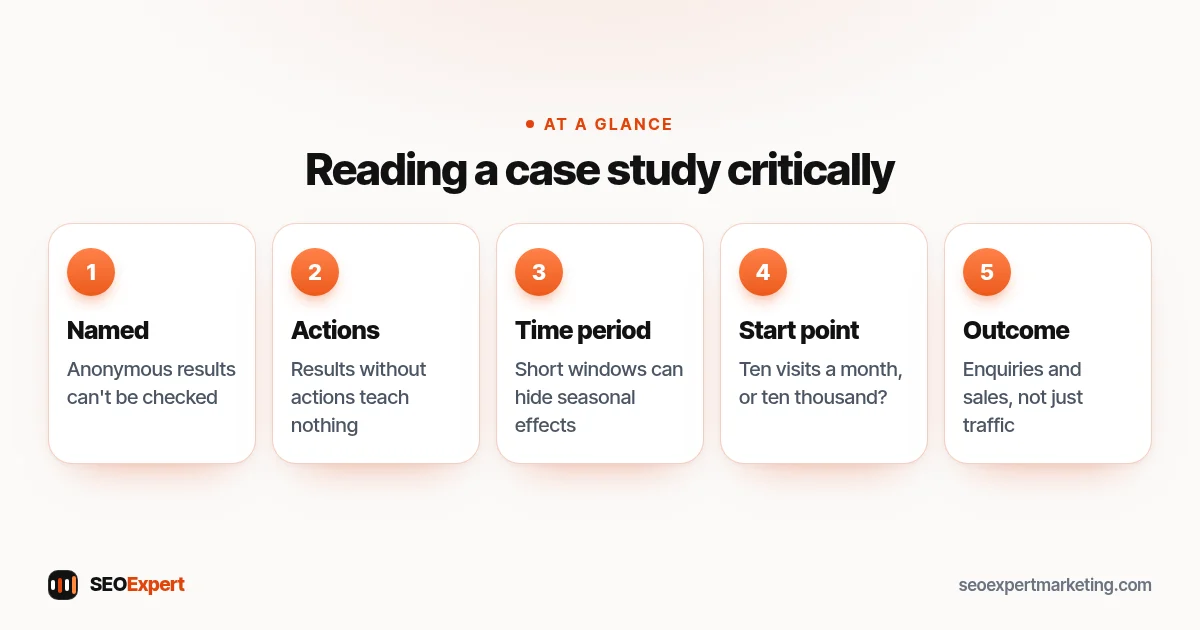
- Is the business named? Anonymous results are impossible to check.
- What exactly was done? A result without a list of actions teaches nothing.
- What was the time period? Short windows can hide seasonal effects.
- What's the starting point? "300% growth" from ten visits a month is very different from 300% growth from ten thousand.
- Does the result matter to the business? Traffic is good; enquiries and sales are better.
- Is it relevant to you? A large job platform's results won't translate directly to a local plumber.
Five questions to ask when you read SEO case studies:
Why we don't show client SEO case studies yet
We're a new agency. Rather than invent results or show unnamed graphs, we publish what's true: prices, what's included in each plan, and the public progress of this website from zero, including the parts that haven't worked yet. When clients give us permission to share their real numbers, we'll add proper SEO case studies here. Our guide to how long SEO takes already includes this site's early Search Console numbers.
What a small business can copy today
- Set up Search Console and fix the errors it shows, as Saramin and the Wix sites did.
- Add accurate structured data where it applies to you.
- Improve how your pages appear in results: titles, descriptions, images.
- Test changes on a few pages, measure, then roll out.
- Track enquiries and sales, not just traffic.
Our technical SEO audit checklist covers the first three, and our SEO report guide shows how to measure results honestly. If you'd like help, our SEO services start with a free website review on WhatsApp.
SEO case studies: quick answers
Where can I find trustworthy SEO case studies?
Google's Search Central case studies are a good start: companies are named and the actions and results are described. Treat anonymous case studies with caution.
Do SEO case studies prove SEO will work for me?
No. They show what's possible for the companies involved. Your results depend on your market, competition, site and the work done.
Why don't you show your own client case studies?
We're a new agency. We'll publish client case studies only with permission and real numbers; until then we share this site's own progress in public.
What's the most common lesson from SEO case studies?
Fixing the basics, crawling, indexing, duplicates and accurate structured data, often brings significant gains before anything more advanced.
