Local PPC means paying for ads that show to people in your area, such as Google search ads targeted to your town, Local Services Ads or ads on Google Maps. Local SEO means earning a place in the free local results: the map listings and the normal results below them. Both can bring calls from nearby customers, but they work very differently. This guide compares local PPC vs local SEO honestly, explains when each makes sense and how they work together. We offer local SEO, not paid ads, so keep in mind which side we work on; we'll still tell you plainly when ads are the better choice.
What is local PPC?
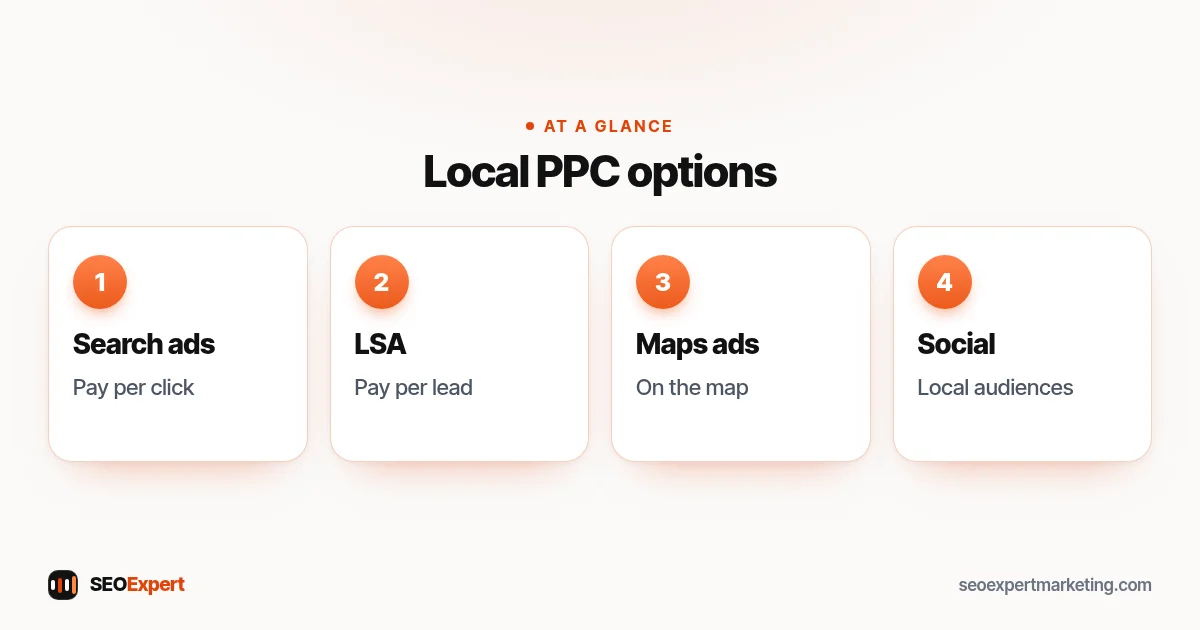
PPC stands for pay-per-click, although some local ad types charge per lead instead. The main options for a local business are:
| Type | How you pay | Where it shows |
|---|---|---|
| Google search ads with location targeting | Per click | Above and below the normal results, marked as sponsored |
| Local Services Ads (in eligible countries and trades) | Per lead | Prominently on Google Search and Google Maps for some local service searches |
| Ads on Google Maps | Per click (directions, calls and website clicks count); some map pin formats per 1,000 impressions | At the top of Maps results and as pins on the map |
| Social media ads | Per click or per view | Facebook, Instagram and similar |
Google's help on location targeting explains that ads can be shown in the locations you choose, such as countries, areas within a country or a radius around a location, and that targeting is based on a variety of signals, so you should check your results and adjust.
What is local SEO?
Local SEO is the work that helps your business appear in the free local results: a complete Google Business Profile, a website with clear service and location pages, consistent listings and genuine reviews. You don't pay Google for these positions. In fact, Google's help on local ranking says there's no way to request or pay for a better local ranking on Google; local results are mainly based on relevance, distance and popularity. Our local SEO checklist covers the full list.
Local PPC vs local SEO: the main differences
| Local PPC | Local SEO | |
|---|---|---|
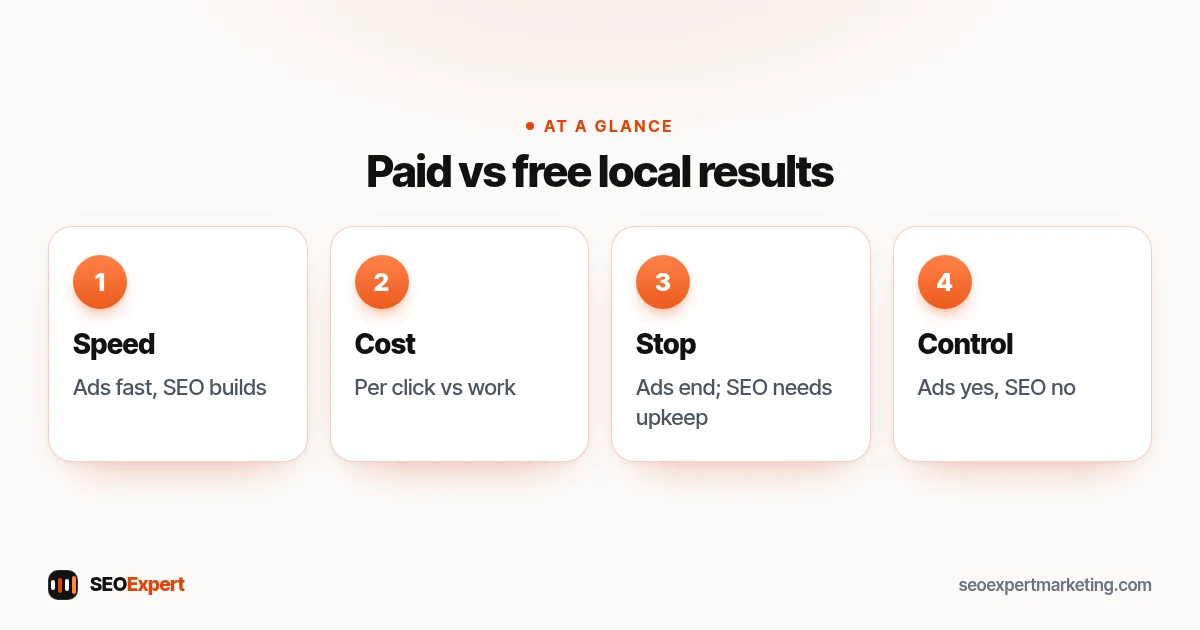
| Speed | Ads can show soon after approval | Usually builds over months |
| Cost model | You pay for each click or lead | You pay for the work (yours or an agency's), not per visit |
| When you stop paying | The ads stop | Your profile and pages stay live, but rankings can slip without upkeep |
| Control | You choose areas, times and budget, plus keywords (search ads) or services (Local Services Ads) | Google decides who ranks |
| Label | Marked as sponsored | Shown as normal results |
| Skills needed | Ad setup, bidding, tracking, ongoing tuning | Profile, content, reviews, technical basics |
For a wider comparison that isn't limited to local businesses, see our guide to SEO vs PPC.
When local PPC makes more sense
- You're new. A new business with no reviews or rankings can use ads to get calls while local SEO builds.
- The work is urgent or seasonal. Emergency repairs, snow clearing or holiday offers often suit ads you can switch on and off.
- You want to test demand. A short local PPC campaign shows which services and areas bring enquiries before you invest in pages for them.
- You need to fill a gap. If a competitor dominates the map results for one service, ads can keep you visible while you improve.
When local SEO makes more sense
- Steady, year-round demand. Services people search for every week, such as dentists, accountants or plumbers, reward long-term visibility.
- Tight ongoing budgets. Ads cost money for as long as they run. Local SEO work you do yourself or pay for once can keep bringing enquiries afterwards, but it's slower, less predictable and still needs upkeep.
- Trust matters. Reviews show on your free Business Profile, and Google says more reviews and positive ratings can help your local ranking. For bigger decisions, a complete listing with genuine reviews, photos and clear details helps people choose you, whether or not you also run ads.
- You have reviews and real local proof. A strong Business Profile with genuine reviews is one of your best assets, and it's free to show.
What affects local PPC costs
There's no standard price for local PPC, which is why we don't quote one here. What you pay depends on the bids and daily budget you set, how many other businesses bid on the same searches in your area, your trade, the size of your target area, the times your ads run and how well your ads and landing pages match what people searched. Searches where many businesses compete, such as some emergency and high-value services, can cost more per click, though Google says highly relevant keywords and ads can win a higher position at a lower price.
The number that matters isn't the cost per click but the cost per real enquiry and per job won, so set up tracking before you spend.
Setting up local PPC well
- Target the area you actually serve, using towns or a sensible radius, and exclude places you don't cover.
- Run ads when you can answer. An ad schedule that matches your opening hours avoids paying for calls nobody picks up.
- Add your phone number and location so people can call or find you straight from the ad.
- Check the location option. Ads can show to people in or regularly in your area ("Presence"), or also to people elsewhere who've shown interest in it. Google recommends the broader setting, but if you only serve people nearby, test "Presence" and see where your calls come from.
- Exclude irrelevant searches, such as jobs, training or DIY terms, with negative keywords.
- Send each ad to the matching service page, not the home page.
- Track calls and forms as conversions, so you can see which local PPC ads bring real enquiries.
Local Services Ads in brief
Where they're available, Google's Local Services Ads let service businesses receive leads as calls and messages directly from the ad, and Google says you pay only for leads related to your business and the services you offer. Eligible businesses can earn a Google Verified badge after passing Google's screening checks. Google also notes that if you regularly fail to answer calls or respond to messages, your ad ranking may be affected.
Availability, checks and costs vary by country and trade, so check the details for your business. Google is also moving Local Services Ads into Google Ads as Performance Max campaigns with pay-per-lead goals, in phases from August 2026 (US first, other countries from 2027). Google says you still pay only for valid leads.
Fix these local SEO basics before you spend on ads
Ads send people to your profile and website, so weak foundations waste ad spend. Before a local PPC campaign, make sure your Google Business Profile is complete and verified (ads on Google Maps need a verified profile linked to Google Ads through location assets), your hours and phone number are right everywhere, each main service has its own clear page, and your site works well on a phone. Our guide to Google Business Profile optimization and our SEO cheat sheet cover these quickly.
Using local PPC and local SEO together
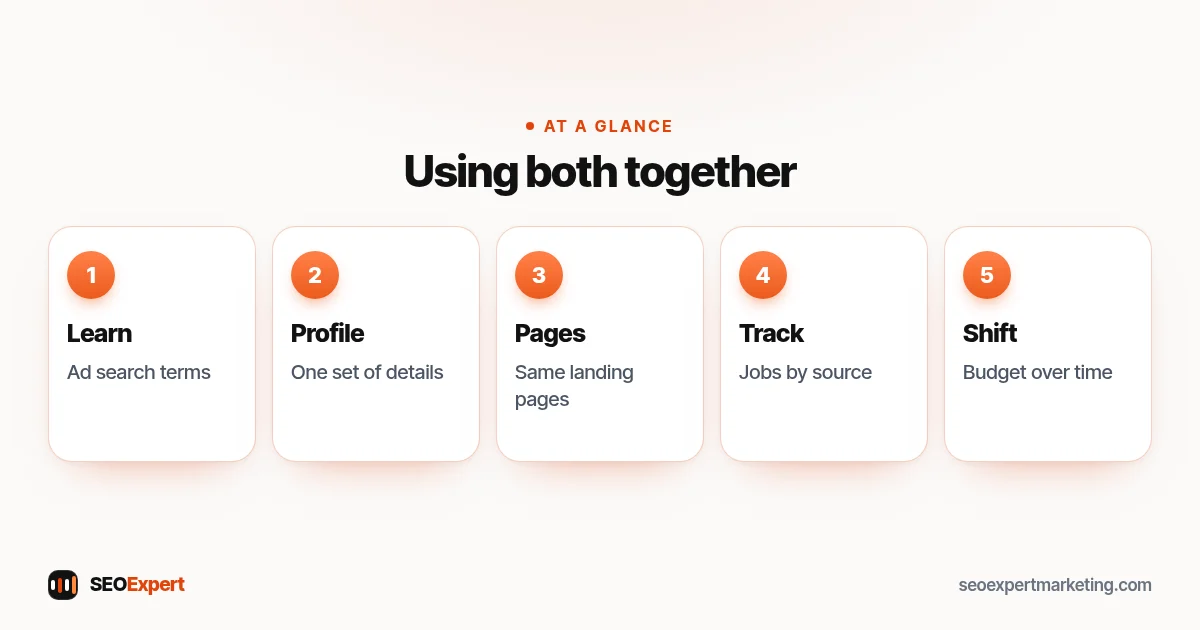
- Share what you learn. The search terms that bring enquiries from ads are strong candidates for new or improved pages.
- Keep one consistent profile. Your Google Business Profile, website and ads should show the same name, phone, hours and services.
- Use the same landing pages. A good service page helps both: ads convert better and the page can rank on its own.
- Track enquiries by source. Compare the cost of each real enquiry or job from ads with the cost of your SEO work over the same period.
- Shift budget as rankings grow. As your free local visibility improves for a service, you may need fewer ads for it.
Free ways to get quicker local visibility
Not every quick win needs an ad budget. These free steps can bring calls sooner while longer-term work builds:
- Post on your Google Business Profile with offers, seasonal reminders and photos of recent jobs. See our guide to Google Business Profile posts.
- Ask past customers for repeat work and referrals, by email, text or a printed card left after each job.
- Get listed accurately on the few directories that matter in your trade and area.
- Partner with related businesses, such as an electrician and a kitchen fitter recommending each other.
- Use your Facebook page to share real jobs with people in your area. Our guide on how to make a business Facebook page explains the setup.
None of these replaces a strong profile and website, but together they can fill the gap while rankings grow.
How to compare them fairly
Don't compare clicks with rankings. Compare outcomes: calls, booked jobs and revenue from each source over at least a few months. Ads give quick, measurable results but stop when the budget does. Local SEO is slower to start but can bring enquiries at a lower cost per job over time. For most local businesses, the honest answer to local PPC vs local SEO is "both, in different proportions at different stages".
Example: a new plumbing business
Imagine a plumber who has just started trading. In the first months, a small local PPC budget on emergency repairs and boiler servicing in the town brings the first calls, while the plumber sets up the Business Profile, builds pages for emergency repairs, boiler servicing and bathroom fitting, and asks every customer for a review. After half a year, the search terms report shows boiler servicing enquiries are cheap and frequent, so that page gets more detail. As the map listing starts appearing for more searches, the plumber keeps ads only for the most urgent work and the busiest season.
Questions to ask before hiring a local PPC manager
- Will the ad account be in my name, so I keep it if we stop working together?
- How will you track calls and enquiries, not just clicks?
- Which areas, times and searches will you target, and which will you exclude?
- How is your fee worked out, and is it separate from what I pay Google?
- How often will I get a report, and what will it show?
Common mistakes
- Targeting a radius far wider than you really serve.
- Sending ad clicks to the home page instead of the matching service page.
- Treating local SEO as a one-off job and then stopping all upkeep.
- Judging either channel by clicks instead of booked jobs.
- Missing calls and messages from Local Services Ads.
- Different phone numbers or hours across ads, profile and website.
What we do and don't do
We focus on local SEO. We don't run paid ad campaigns, and we won't pretend local SEO replaces ads in every case. If you use ads, we'll make sure your Business Profile and service pages support them, so the clicks you pay for are more likely to become customers. Our local SEO services cover the profile, pages, listings and reviews. To start, ask for a free website analysis.
Local PPC vs local SEO: quick answers
What is local PPC?
Local PPC is paid advertising shown to people in a chosen area, such as Google search ads with location targeting, Local Services Ads, ads on Google Maps and local social media ads.
Is local PPC or local SEO better?
It depends on your stage and goals. Local PPC brings faster, controllable visibility while you pay; local SEO builds free visibility over months. Many local businesses use both.
Can I pay Google for a better local ranking?
No. Google says there's no way to request or pay for a better local ranking. Ads can show above or among the free local results, but paying for them doesn't buy a better free ranking.
How do Local Services Ads charge?
Google says you pay only for leads related to your business and the services you offer. Availability and costs vary by country and trade.
Should a new business start with ads or SEO?
Often both: a small ad budget can bring early calls while you build your Google Business Profile, service pages and reviews for long-term visibility.
How do I compare local PPC and local SEO results?
Compare calls, booked jobs and revenue from each source over several months, not clicks or rankings alone.
